Why General Tech Brokers Misread Autonomy Risk and What a Robotics-Literate Broker Catches Instead
Robotics-literate brokers catch the autonomy exclusions generalists miss.
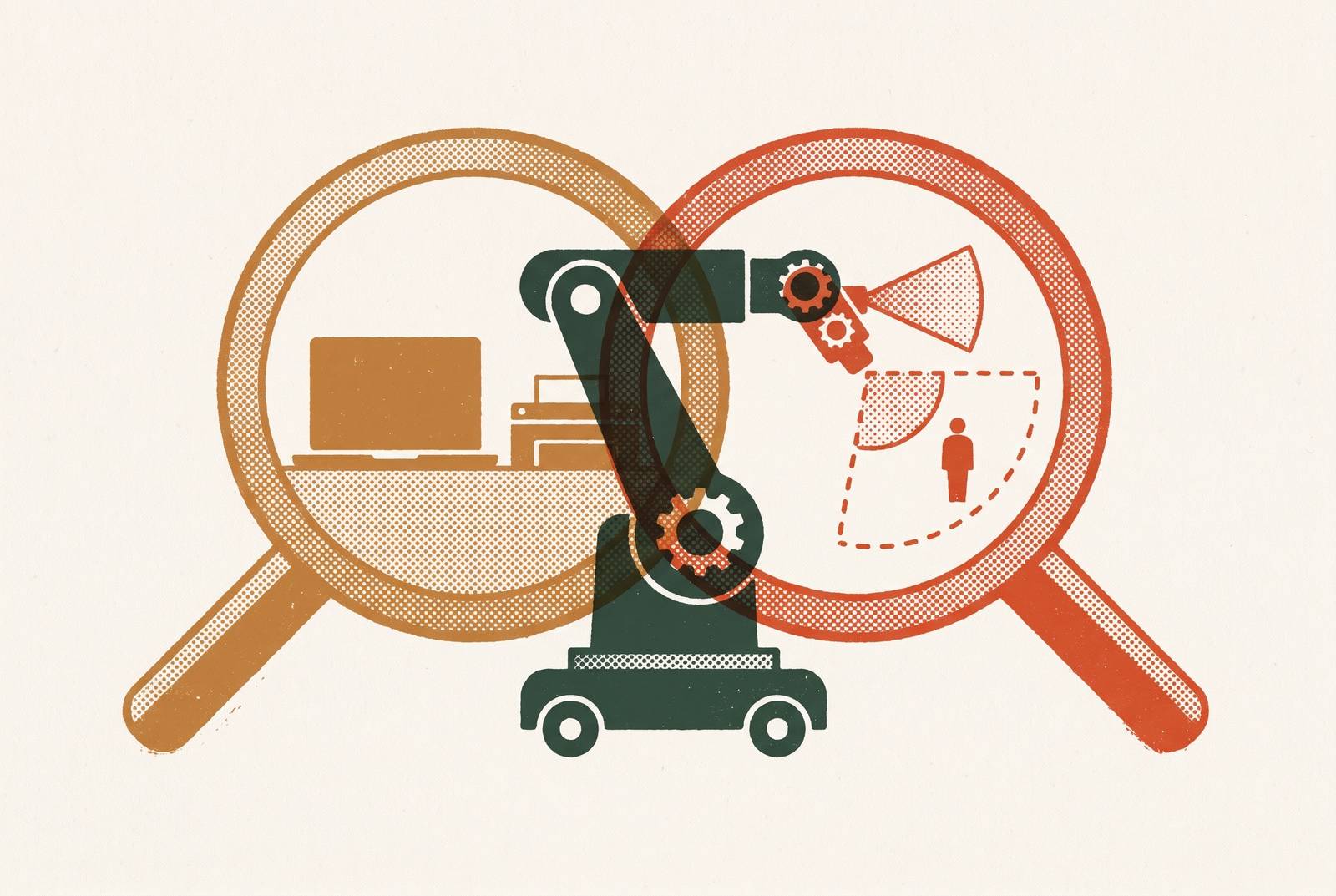
MSA insurance clause review for hardware and robotics startups must check what the contract requires against the actual policy wording as well as the certificate of insurance. General tech placements can miss the decision chain behind autonomous operations and the exclusions that remove coverage for it. A robotics-literate broker uses that chain to shape the submission, coverage triggers, and limits and to check what customers require before the policies bind.
Why physical AI breaks the liability framework standard policies were built to handle
With an autonomous system, decisions shaped by several parties take the place of a short chain in which the designer, manufacturer, and operator are accountable. Sensors, software, and AI models determine how the system acts as conditions change. IMA Financial Group describes incidents in advanced manufacturing that can involve the manufacturer, robotics or automation vendor, AI or software provider, sensor and data platform suppliers, and systems integrator or maintenance contractor.
That structure complicates the assignment of fault because the outcome comes from interconnected systems rather than one person's action or one manufacturer's defect. Root cause analysis takes longer, delaying resolution and increasing defense costs. A framework built to assign responsibility along a short chain is a poor fit for a system whose decisions depend on several suppliers and the conditions in which it runs.
The duty of care also extends beyond what the machine does. IMA describes growing attention from regulators and courts to whether an AI-generated alert was reviewed, acted on, and documented. Ignoring an alert can become a potential control failure, as can failing to explain why it was ignored.
What general tech brokers actually do when they see an autonomous system — and where that goes wrong
A general tech broker commonly starts with a general liability form and a tech E&O application. Those instruments fit familiar software-and-hardware clients, so applying them to robotics is an understandable categorization reflex. The forms direct attention toward familiar exposures while leaving the system's autonomous behavior insufficiently described.
General liability addresses bodily injury and damage to other people's property, making it an anchor for third-party claims and site access. Site owners require proof before deployment, but that requirement does not make GL a complete program. Tech E&O addresses wrongful acts or performance failures tied to technology. The standard form was written for code that advises, making it a poor fit for code that moves.
Standard commercial property policies typically limit equipment coverage to a named location. A warehouse, hospital corridor, or construction site changes the exposure. Inland marine coverage exists to follow equipment off-premises, yet a generic tech placement rarely begins there.
The AI exclusion wave that is quietly voiding coverage autonomous system operators think they have
AI exclusions are making that mismatch more consequential at renewal. The market includes a minority of carriers offering affirmative AI coverage, a growing group filing broad exclusions, and a large middle that has taken no position. Silence does not establish that coverage will respond. Operators cannot infer protection merely because a policy does not prominently address autonomy.
ISO CG 40 47, CG 40 48, and CG 35 08 are policy wordings that warrant specific review for AI exclusion exposure. W.R. Berkley's absolute AI exclusion is another anchor in that review. ISO defines generative AI as a machine-based learning system or model trained on data that can create content or responses, including text, images, audio, video, or code. A broker may not recognize that this definition can reach the robot control software a client runs.
Verisk said in July 2026 that it was weighing new exclusions for agentic AI, adding another layer of uncertainty for autonomous systems operators. At renewal, what a policy covers can change even when the coverage names on the declarations page stay the same. An added endorsement may remove the very exposure the placement was intended to address. A specialist must first learn what the robot does, then check what the policy excludes.
What a robotics-literate broker actually reads when underwriting an autonomous system
A robotics-literate broker starts with the autonomy level and operational design domain of each deployed system. The inquiry covers where the robot operates, the conditions it is rated for, and whether actual use stays within those conditions. Software versioning belongs in the same assessment. Over-the-air updates can change the robot's behavior after the policy is written, so update cadence is part of the risk.
Failure-mode documentation then establishes what happens when a sensor degrades, a model produces an unexpected output, or communications are lost. Human-override protocols show whether deterministic safeguards constrain the system. Underwriters require evidence. Continuous telemetry, automated intervention mechanisms, and audit log architecture are central because logs bear heavily on proving what happened after physical damage.
The inquiry also follows the people exposed to the equipment. Cobots working directly alongside employees introduce workers' compensation and employer's liability exposures that a tech E&O application may miss. IMA documents a fatal incident in Grand Rapids after which the worker's wife sued the five companies responsible for manufacturing the robot. Responsibility can involve the maker, operator, programmer, owner, and overseer.
Cyber risk follows a different architecture as well. IMA describes how cyberattacks or data poisoning can corrupt models, disable robots, halt production, and trigger business interruption and third-party liability claims across linked IoT, AI, robotics, and cloud infrastructure. A software security event can become a physical operating loss. That connection belongs in the broker's reading of the system.
The coverage program a specialist assembles — and why each line exists
The resulting program assigns coverage to specific exposures rather than treating robotics as a label on a standard bundle. General liability is still needed for third-party bodily injury, property damage, and site access. Its wording still needs to be checked for AI exclusions. Otherwise, the policy most visibly associated with physical harm may exclude the autonomous behavior that caused it.
Inland marine or equipment coverage addresses the separate risk of damage to the deployed hardware. Its purpose is to follow the equipment off-premises, rather than leave protection tied to the company's named location. Umbrella or excess coverage adds higher limits when enterprise or government contracts call for more than the primary policies provide.
D&O protects directors and officers, including investors who serve on the board. AI exclusions now affect this line too. If shareholders allege that the board misrepresented AI capabilities or the company's risk posture, an absolute AI exclusion may prevent the policy from responding. A specialist therefore considers the governance exposure as well as the robot's physical operations.
Workers' compensation and employer's liability address the employment-related dimension of cobots working near people. That exposure sits outside a program framed only around product liability and technology performance. Each line has a distinct job to perform. The specialist's contribution is knowing which policies and carriers fit autonomous operations, rather than assuming that more coverage names necessarily produce a coherent program.
How the underwriting submission shapes the premium and the coverage — not just the application
The submission turns operational knowledge into evidence an underwriter can price and cover. For autonomous systems, underwriting requirements now include structural validation of agentic workflows, continuous telemetry tracking, and automated intervention mechanisms. A description of the product is not enough. Without the required proofs, carriers can respond with denial or prohibitive premium penalties.
AI disclosure questionnaires, model inventories, and governance protocols make that evidence concrete. Risk registers identify the AI risks the company has documented, while output verification processes and human oversight protocols show how it governs them. Those artifacts can improve the underwriting position. Companies able to demonstrate them may negotiate narrower exclusions or affirmative endorsements, while companies without evidence-based governance can face absolute exclusions at renewal.
The distinction is visible in what the submission explains. A generic application describes the business as a technology company or robotics manufacturer, while a specialist submission describes how the system decides, what constrains it, and how failures are logged. That detail supports terms matched to the actual exposure. Without that evidence, a company can face higher retentions, less capacity, and tighter conditions. A poor submission therefore does more than increase the premium, because it can produce exclusions that defeat coverage when a claim arrives.
What insurance clauses should a robotics startup watch for in its first enterprise or government MSA?
Broad indemnities, performance guarantees, and uncapped liability can extend to IP infringement, security incidents, and sometimes “AI outputs.” These obligations do not automatically map onto standard tech E&O. With a policy built around conventional technology performance, the vendor may take on duties that its insurance does not cover.
Minimum limits for tech E&O and cyber are common contract conditions. Larger customers in healthcare, finance, or government often require higher tech E&O limits and may also ask for D&O before they will do business. Limits are only one part of the review. A policy can meet the stated amount while its triggers and exclusions leave the contracted exposure uninsured.
For a hardware or robotics startup, the practical review must therefore compare the contract's insurance requirements and indemnification language with the actual policies before placement. Additional insured language needs to be checked against the policy as well as included in a certificate request. The certificate can satisfy a procurement checkbox while the underlying wording excludes AI-related claims, including claims involving hallucinations, IP infringement, or bias.
A robotics-literate broker reads those requirements before arranging coverage so that limits, triggers, and AI exclusions are considered together. Buyers also need confirmation that the vendor's policies apply to the relevant AI claims. The false comfort comes from the generic placement. A customer receiving a certificate has not thereby received evidence that the coverage will respond to the autonomous system's failures.
What to look for when evaluating whether a broker actually understands autonomous systems risk
A founder or operator can evaluate the broker's method without becoming an insurance specialist. The first criterion is whether the broker reviews policy wording beyond the declarations page for AI exclusion endorsements, including the ISO forms identified above. The review must reach the operative language. A discussion limited to policy names and limits does not establish how an autonomy-related claim would be treated.
The next criterion is the substance of the submission. A robotics-literate broker asks about autonomy level, operational design domain, software update cadence, telemetry architecture, and audit log capability. Those questions expose the framework being used. A submission that stops at “technology company” or “robotics manufacturer” has not described the decision chain or the safeguards an underwriter needs to assess.
Placement and contract review provide further tests. The broker should check whether inland marine coverage follows the hardware to every deployment site and use the policy wording as well as the certificate to check enterprise or government requirements. Carrier selection also needs a reasoned explanation. A specialist should be able to name the carriers that write autonomous systems risk affirmatively and explain how their coverage fits compared with that of standard admitted market carriers.
Broker commissions are already included in the premium whether a specialist or a generalist places the policy. The decision is therefore about what work that commission buys. A licensed human broker reading every policy before it binds is a non-negotiable safeguard for autonomous systems operators. Because the exclusion wave moves faster than renewal cycles, last year's protection is no proof of what this year's wording will cover.